


Since “Dropping mental and emotional baggage” is the slogan of Travel Light Transformation Life Coaching, the power of emotional intelligence is another crucial key for me in becoming the best version of yourself and living a life in abundance.
But before I get to the intelligence part of your emotions, let me briefly introduce you to the domain of your emotions: This might come as a surprise to you, because no, it is not your heart, but… (drum roll): your Subconscious Mind!
Understanding Your Mind and Emotions
Your mind is energy operating in the brain, and can be divided into your conscious- and subconscious mind. The conscious mind – the analytical, creative, logical and rational part – I like to call it my “smart mind” – only makes up 5% of the mind. The remaining 95% of your mind is running on a subconscious level. This part is storing all your memories from birth, and includes your emotions, beliefs, habits, behaviours, cravings, values and instincts. Let’s think of it as a computer:

Source: (http://psychtutor.weebly.com/cognitive-level-of-analysis.html)
What you see on the screen, represents your conscious mind, and all the thousands of programs running on autopilot in the background that you are not aware of, but that are essential to present the image on the screen, represents your subconscious mind.
Where Are Emotions Made?
According to neuroscientists, the subconscious mind is stored not only in the brain, but in every single neuron in the body. Meaning, every emotion, belief, memory etc. is found throughout your entire body, affecting every cell.
If this is true, it will explain why trauma and long-term negative emotions like guilt, shame, anger, frustration, sadness and fear also affects the body physically over time. In the neuron, every emotion that is stored attracts the same emotion. These similar emotions link up and form a chain that gets longer and longer (and more unstable) the more you experience that specific emotion.
Emotional Chains
Let me explain by taking anger as an example: the first time you experienced anger, maybe as a toddler when somebody took a toy from you, that anger emotion was stored in a very specific location in every neuron throughout your body.
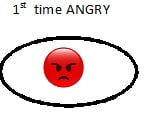
Every time after that when you got angry, the emotion went to that location, linked to the previous anger emotion and formed a chain.
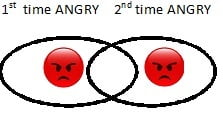
In the same way, you have chains for every thinkable emotion in your neurons; positive as well as negative. The longer these chains become through the years, the more unstable they get.

Consequences of Unstable Negative Emotional chains
When you have numerous unstable negative emotional chains in your neurons, your emotions start controlling you, instead of the other way around. For example, when you get angry, instead of being able to slowly count to ten, you instantly react by throwing a plate at the victim. Or you engage in road rage. Or uncontrollable emotional eating, that results in unwanted weight gain. Or your normal grief due to the loss of a pet spirals into a full-blown withdrawal state of depression. I think you get the idea.
Bottom line is: when you find yourself in this unstable, uncontrollable emotional state, we say that you have a low, or lacking, emotional intelligence (EQ). Fortunately, your EQ is not set in stone. It can be developed, altered and learned.
Other signs of people who lack EQ include:
- They always have to be “right”.
- They are oblivious to other people’s feelings.
- They behave insensitively.
- They blame others for their problems.
- They have poor coping skills.
- They have emotional outbursts.
- They struggle with relationships and personal connections
- They turn conversations toward themselves.
- They avoid emotional situations, or try to “laugh it off”.
- They are prisoners of their insecurities. They hide their insecurities by acting in a dominating manner.
Signs that you are emotionally smart
- You can read non-verbal communication.
- Your empathy increase. You are interested in other people and their feelings and thoughts.
- You avoid stereotyping and judging others harshly, and you can manage to live your life in an open, honest way.
- You are emotionally resilient. You are able to bounce back quickly after an emotional setback.
- You know where you need improvement, and continuously work on your weaknesses to improve your performance.
- You are aware of your strengths, and use them to assist others and to pursue success.
- You are able to live in the moment – increased mindfulness.
- You are able to set healthy boundaries, and express your wishes assertively, not aggressively.
- You are aware of your own feelings, and allow them to be present.
- You avoid negative self-talk.
- You have the ability to say “no” – guilt free.
- You are highly productive, love a challenge, and are very effective in everything you do.
- Although you have goals and dreams, you are grateful for what you already have, and this attitude of gratitude keeps you humble and grounded.
- You embrace change fearlessly. You realise that staying in your comfort zone is not the ideal place to learn and grow, and you are brave enough to break out of the zone.
- You are curious and eager to learn. You are not controlled by your ego, therefor you can admit that there are gaps in your knowledge that needs to be filled.
- You pursue progress, not perfection. You realise that you are on an endless journey of transformation.
- You are not too stubborn and sensitive to accept feedback. You listen to constructive criticism as objectively as possible, and implement useful feedback in your own life.

Tips on how to improve your EQ
- One of the techniques in the 20-hour virtual online Transformation Coaching System™ that I use, Negative Emotion Therapy™, works on your emotions on a subconscious level. All those unstable, negative emotional chains that are stored in your neurons collapse one by one during the therapy. The next time you experience the negative emotion, you will be better equipped and able to deal with the specific emotion. In other words, we remove the chains, and new, controllable ones can start forming from scratch. Schedule a free 30 min consultation with me here.
- Take a look at your work environment. Do you continuously seek praise or attention when you’ve accomplished something? Work at your level of humility. Being humble is silently saying to the world: “I know I did well, and I can be quietly proud about it”. Allow your colleagues to shine as well by putting more attention on them and take delight in seeing how their confidence grows.
- Take responsibilities for your actions. If you’ve upset somebody, apologize immediately. Don’t put it off, and don’t avoid the person.
- Before you take an action, put yourself in the other person’s shoes first. How will your actions or words affect that person? How will you feel if you were on the receiving end of those actions? Or how can you help the other person to deal with the effects?
- Expose yourself to different cultures, perspectives and belief systems. This opens your mind to a world beyond your own. You will be more tolerant and comfortable in knowing that we are all different and unique in our own ways.
Additional Tips to Improve Emotional Intelligence
- Try something new; out of your comfort zone. The more times you leave your comfort zone, the easier it will become. You will develop the resilience you need to manage your emotions and nerves.
- Reflect on your feelings. When you feel a strong emotion like shame, anger, fear, joy or guilt, take a moment to reflect on what provoked that feeling. Try to establish a connection between the event, your belief systems, your thoughts and the feeling.
- Try to change your perspective in situations that triggers intense emotions. For example: If reckless drivers make you furious, try to change your thoughts to: “Oh no, they must have an emergency. I hope they get safely to their destination.” Or change the bad habit of chronic worrying by finding a positive solution instead. “When a worry is allowed to repeat over and over unchallenged, it gains in persuasive power” (Daniel Goleman). Sadness after a loss is necessary to make the psychological adjustments and new plans that will allow our lives to continue eventually. But be warned: bereavement is useful; full blown depression is not. Make an effort to socialize if you show symptoms of depression, or do voluntary work. There is healing in the action of doing something for somebody else who is less fortunate, feel free to try it!
- Listen intently in a conversation to what is being said, as well as how it’s being said. Take note of the speaker’s body language and try to tune into that emotional state. It’s not always easy, especially if you’re like me who constantly think about what I’m going to say next, or what answer I can give when it’s my turn to speak. Practice being an active listener!
- Take both compliments and criticism in your stride. Arrogant people only accept opinions if it’s flattering. On the other hand, insecure people obsess over negative criticism, even if it was well-meant. Find the balance for a realistic self-image, find the lessons to be learnt, and accept your strengths and weaknesses.
Learning About The Power of Emotional Intelligence
Remember: raising your EQ is a process that requires a lot of patience, self-reflection and perseverance. Not only does it add value to your personal life and relationships, but EQ is lately also seen just as valuable (or even more so) than IQ in the workplace.
Employers have realized that a high EQ helps their team to build healthy relationships, reduce team stress, resolve conflict better and improve their job satisfaction. No wonder EQ psychometric assessments form part of most job interviews today.
It sounds like it will be well worth the effort, so why wait? Roll up your sleeves and start today by implementing those tips one by one. And take heart: you already have everything you need inside yourself to be able to become emotionally intelligent. Good luck in raising your EQ through the roof!
Contact me TODAY for a free 30 min online Session!
Ready to dive deeper into the power of emotional intelligence? I am a certified Transformation Life Coach operating in Riebeek Kasteel, Western Cape of South Africa. I also do virtual online life coaching sessions, so no matter where you are situated, all you need is an internet connection, a mobile phone or computer, and a space where you can meet with me uninterruptedly once a week for two hours.
Follow me on Instagram or like my Facebook page.
The next key #8 to personal empowerment (becoming the best version of yourself) is the POWER OF LEAVING YOUR COMFORT ZONE.
REFERENCES:
https://www.mindtools.com/pages/article/newCDV_59.htm, https://www.verywellmind.com/signs-of-low-emotional-intelligence-2795958; Goleman, Daniel, Emotional Intelligence, Bantam Books, 1995; Esterhuyse, Burk, The user manual to your mind, 2010;
