


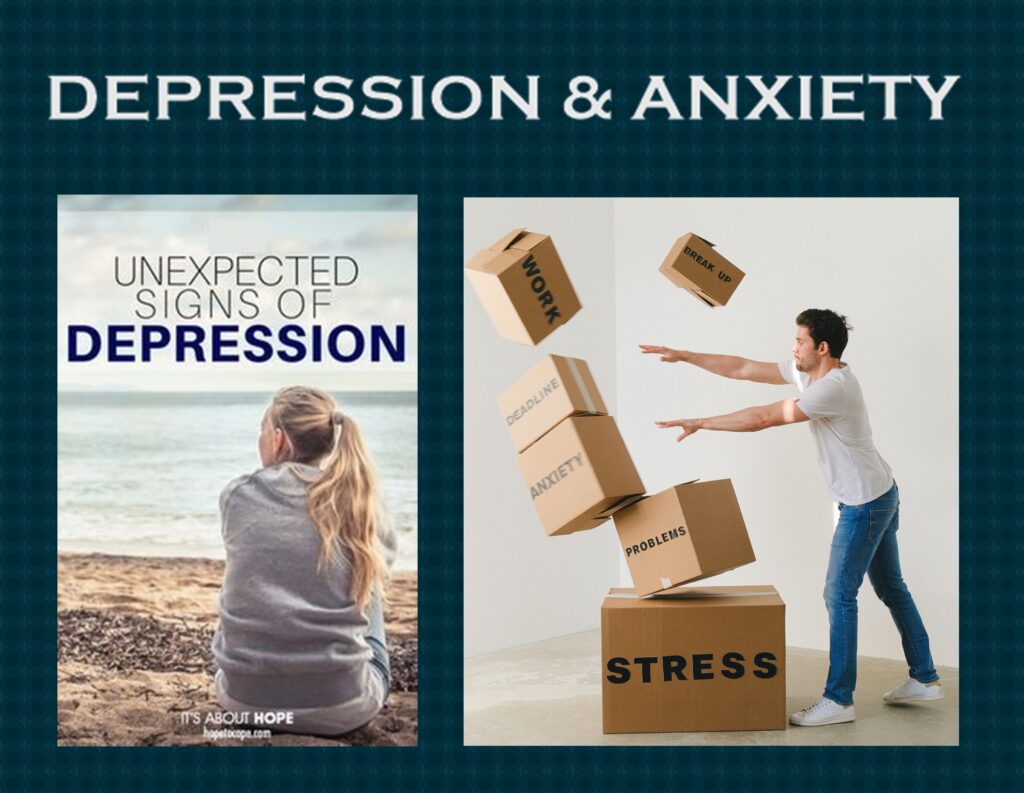
In my previous two articles, I’ve briefly mentioned depression and anxiety. I want to park here for this article, simply because I suspect that more people might unknowingly suffer from these conditions thanks to the world-wide Covid-19 lockdowns.
The first guy that walked the earth, Adam, soon found himself alone, and God made him a companion. That tells me that we were created with a need for intimate relationships.
The lockdowns stripped us from the freedom of being with friends, of touching one another, and of laughing with others (without fear for unseen germs that are ready for an attack if we dare go closer). I don’t know about you, but it sure made an impact on my mental health. And not in a positive way.
Even afterwards, when we hesitantly came out of our bomb shelters, I had to check in on myself regularly. I’m sure we’re going to see the pandemic’s world-wide aftershock in the spike in depression and anxiety diagnoses for quite some time.
Depression
Let’s start with depression. Firstly, I want to categorize major depressive disorder into 3 main types: Mild, Moderate and Severe Major Depression.
For this article, I will focus on the first 2 types, especially mild depression. Mostly because if you suffer from severe major depression, you will have been diagnosed by now and be on serious medication. Just to put you at ease: the symptoms include delusions, hallucinations, feelings of stupor or suicidal thoughts.
SIGNS AND SYMPTOMS OF DEPRESSION
Symptoms for mild depression are general and wide, therefor it’s quite difficult to make a diagnosis. If we only take feelings into consideration, it’s easy to miss a diagnosis. For example, when is it normal sadness that you feel during the period following a specific event, and when does it turn into depression?
A diagnosis for mild depression can be made if you encounter any 2 of the symptoms in the list below, in an intensity that is distressing, but manageable. You might still be able to function relatively normal socially and at work.
Mild Depression Symptoms
– irritability / anger – mostly in men
– hopelessness / helplessness
– guilt / despair
– self-loathing
– loss of interest in activities you once enjoyed
– loss of concentration
– difficulty in making decisions
– lack of motivation / energy
– sudden disinterest in socializing
– daytime sleepiness & an increase in fatigue
– insomnia – change in sleeping patterns
– appetite and weight changes from emotional eating.
– reckless behaviour e.g. substance abuse.
For the believer: It is also very natural to feel far from God when you suffer from depression. You have little to no energy to spend on your relationship with God, and you yearn to feel closer to God. You may even feel that He has abandoned you, and no longer care. There are no signs of a normal life, let alone a life in abundance.
Fortunately, at this stage it’s easy to treat by just making some healthy changes to your lifestyle. However, if left ignored for an unlimited extend of time, mild depression can progress to moderate depression which is a lot harder to treat.
Moderate Depression Symptoms
Additional symptoms of moderate depression include:
– low self-esteem
– reduced productivity
– worthlessness
– increased sensitivities
– excessive worrying
– Uncontrollable emotions
By now, these symptoms can cause problems at home, at work and in your personal relationships. This is when I want to urge you to get professional help. You are not alone; it is not a shame or a sign of weakness. There are therapies, services and medication out there that can help you get your life, and everything you feel you’ve lost, back. Just reach out and admit that you need help. There is a Depression & Anxiety hotline in most countries.
In South Africa, the toll-free number is 0800 12 13 14. I’m convinced Google will help you find a similar support system in your country.
Depression and anxiety are often mentioned together, as in this article. No, it’s not the same condition, but about 60% of the time, depression and anxiety do occur together. Please allow me to simplify and summarize in one sentence (seeing that I’m busy with a series of non-academic articles): Depression is mainly characterised by hopelessness and fatigue, while anxiety (on the flipside of the coin) by nervous energy and restlessness.
Anxiety
So, let’s look at anxiety more closely:
What exactly is anxiety, and how does it differ from normal stress and fear? Stress in itself is not harmful. In fact, we need a certain amount of stress to actually enhance our performance. So, the butterflies in your stomach before you write an exam, before or during an important meeting, while boarding a plane, or whenever, is not our enemy.
The danger comes in when stress completely paralyzes and robs us of normal functioning, and then continues being present long after the event has passed. Like becoming chronically part of our everyday life.
The same goes for fear. While being attacked by a lion, (I live in Africa, remember?) of course we must experience fear while we’re still alive. An adrenaline surge is being released into your bloodstream, making a fight-or-flight response possible in order to save your life. But it’s when you constantly live in this state, without the presence of real, imminent danger, that anxiety is diagnosed.
Anxiety is therefore defined as “the anticipation of future threat”. (DSM-5, 2013, p189)
More Signs and symptoms of Anxiety
– nervousness
– restlessness or feeling tense
– feelings of danger, panic or dread
– rapid, shallow breathing
– heavy sweating or shaking
– trembling or muscle twitching
– feeling overwhelmed
– feeling out of control
– loss of concentration
– heart palpitations
– insomnia
In my previous article on mindfulness, I gave some tips on how to live more in the moment with intention. If you have missed that one, just go back and read it, as mindfulness improves both depression and anxiety.
I am a certified Transformation Life Coach operating in Riebeek Kasteel, Western Cape of South Africa. I also do virtual online life coaching sessions, so no matter where you are situated, all you need is an internet connection, a mobile phone or computer, and a space where you can meet with me uninterruptedly once a week for two hours.
Contact me TODAY for a free 30 min online Session!
Please share this article with your family and friends. Sadly, there is still a huge stigma clinging to depression and anxiety, preventing people to openly admit they struggle. So rather share the article with EVERYBODY, than selecting a hand-picked few and giving them offence, ouch!
Follow me on Instagram or like my Facebook page.
Next up: More natural remedies and tips on how to treat mild depression and anxiety. I will share some lifestyle changes and successful habits that you can start to implement.
References: www.healthline.com; Diagnostic and Statistical Manual of Mental Disorders, fifth edition, (DSM-5), 2013, American Psychiatric Association
